


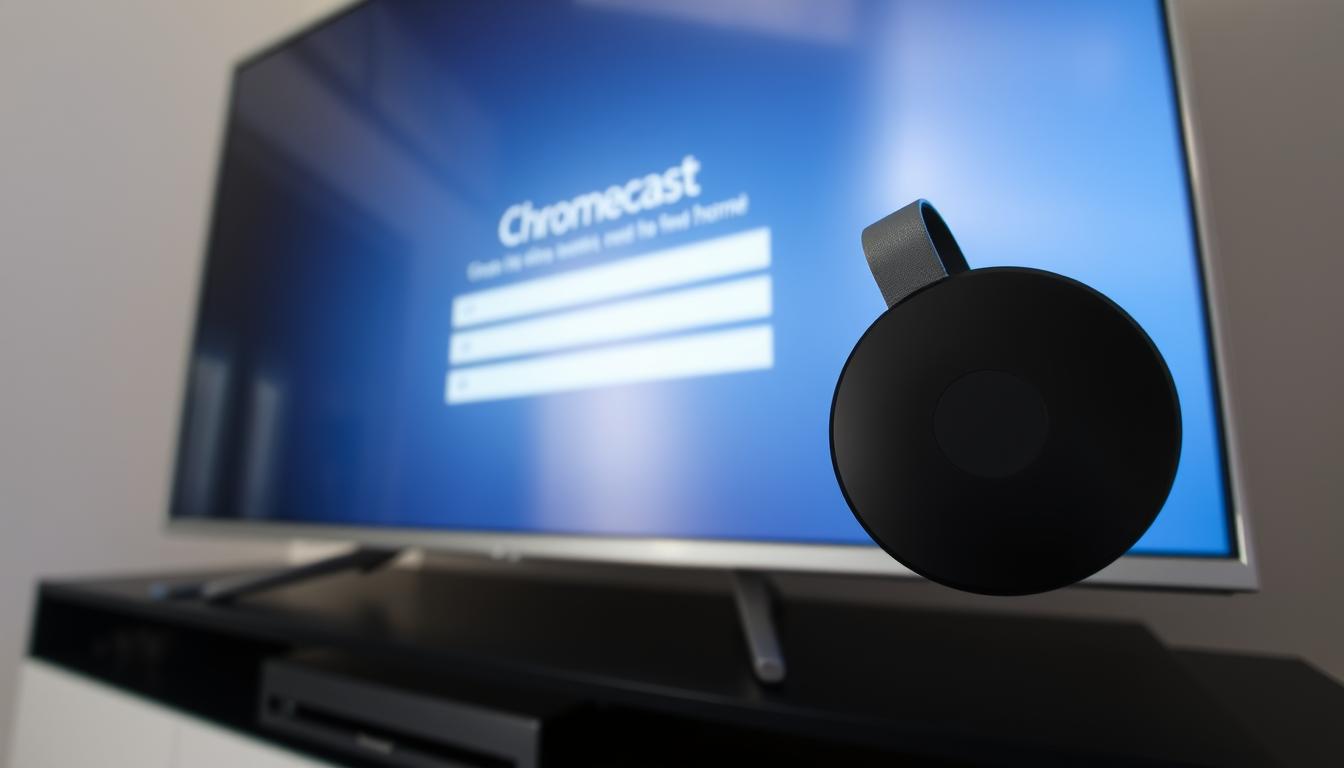
Did you know that over 55 million households use streaming devices like Chromecast to watch their favorite shows? What started as a Netflix-and-YouTube-only gadget has exploded into a must-have tool for modern entertainment. Best of all, it’s designed to work seamlessly—even if you’ve never plugged in a streaming device before.

This guide cuts through the technical jargon. You’ll learn how to get your device running in minutes, with zero frustration. Whether you’re pairing it with a JBL Flip speaker for movie nights or a TP-Link Archer router for stable connections, we’ve got you covered.
Here’s the best part: Chromecast updates itself automatically once connected to Wi-Fi. No need to hunt for software patches or confusing menus. Just plug it in, follow a few steps, and you’re ready to stream.
Key Takeaways
- Works with popular audio gear like JBL Charge speakers and Harman Kardon systems
- Self-updating feature ensures your device stays current
- Beginner-friendly steps require no technical expertise
- Compatible with most Wi-Fi routers, including TP-Link Archer models
- Includes tips for enhancing your setup with budget-friendly JBL audio options
Getting Started with Chromecast
Streaming your favorite shows just got easier. Modern devices let you turn any TV into a smart hub, and this tool does it without complicated setups. Imagine hosting movie nights where everyone can share videos or music from their phones. That’s the magic of seamless integration.
Why It Works for Everyone
Originally designed for Netflix and YouTube, this gadget now supports over 6,000 apps. Whether you’re binge-watching alone or sharing vacation photos with friends, it adapts. Auto-updates keep features fresh—no manual downloads needed. Just plug it in, and it evolves with your needs.
What You’ll Need
To start, ensure you have:
- A smartphone or tablet (Android 8.0+ or iOS 14+)
- Wi-Fi with at least 5 Mbps speeds
- An HDMI port on your TV
Hardware matters too. Pairing with devices like JBL Charge speakers boosts audio quality, while routers like TP-Link Archer ensure stable connections. Check compatibility with this quick guide:
| Device Type | Recommended Hardware | Performance Impact |
|---|---|---|
| Audio Systems | JBL Flip 5, Harman Kardon | Crisp sound for movies |
| Storage | SanDisk Extreme Portable SSD | Faster media transfers |
| Connectors | USB 3.2 Gen 2 Type-C | Reliable power delivery |
Got everything? Perfect. Next, we’ll walk through optimizing your network and devices for flawless streaming.
Essential Tools and Setup Requirements
Optimal streaming starts with the right hardware setup. Your router acts as the backbone of your entertainment system, determining whether you’ll enjoy buffer-free movies or endless loading screens. Let’s break down what truly matters for a frustration-free experience.

Router Choices That Make a Difference
TP-Link Archer and TP-Link Deco routers lead the pack for streaming reliability. The Archer series excels in single-room setups, delivering speeds up to 1.9 Gbps for 4K content. Deco’s mesh system covers larger spaces, eliminating dead zones in multi-story homes.
| Router | Best For | Max Speed |
|---|---|---|
| Archer AX73 | Small apartments | 1.9 Gbps |
| Deco XE75 | Large homes | 5.4 Gbps |
Speed and Storage Essentials
Your internet needs at least 15 Mbps for HD streaming – double that for 4K. Pair your setup with a Kingston Canvas Plus microSD card or 1TB USB 3.2 drive for local media storage. These accessories load content 3x faster than standard options.
- Use dual-band routers to reduce interference
- Position hardware away from metal objects (like black and brass decor)
- Test speeds using your streaming app’s built-in tool
Pro tip: The SiliconPower Armor external HDD adds portable storage without compromising your network bandwidth. Remember – weak signals or outdated cables often cause 80% of streaming issues. Choose wisely, and you’ll never miss a plot twist again.
Step-by-Step chromeсast set up Process
Transforming your TV into a smart hub takes just three taps. Grab your phone, and let’s turn that HDMI port into a portal for endless entertainment. No cables, no confusion – just pure streaming magic.
Power Up the Google Home App
First, download the Google Home app from your device’s store. Open it and tap the “+” icon in the top-left corner. Select “Set up device” and choose your streaming stick from the list. The app will display a unique code – match it to the one on your TV screen.
Wi-Fi Handshake and Updates
Pick your network from the app’s dropdown menu. Use a dual-band router like TP-Link Deco for faster 4K streaming. Once connected, your device automatically checks for updates. Don’t unplug it during this 2-5 minute process – interruptions could cause glitches.
| Common Hiccups | Quick Fixes | Helpful Tools |
|---|---|---|
| Device not found | Restart router and phone | SiliconPower Armor A60 |
| Weak signal | Move router closer to TV | 3.2 Type-C 2×2 cable |
| Update stuck | Check internet stability | Kingston DataTraveler Exodia |
Stuck? Later sections cover advanced fixes. For now, keep your Harman Kardon speakers or JBL PartyBox ready – we’ll connect them after setup completes. Most issues resolve by simply waiting a few extra minutes.
Once the progress bar finishes, your TV will display a success message. Now explore apps, cast photos, or blast music through your Marshall portable speaker. Welcome to stress-free streaming – your Friday nights just got upgraded.
Troubleshooting Common Setup Issues
Even the smoothest tech setups can hit a snag. If your screen freezes or content won’t load, don’t panic—most issues stem from simple network glitches or temporary software hiccups. Let’s tackle these like a pro.

Resolving Connectivity Hiccups
Wi-Fi conflicts often cause devices to disappear from your network. Start by rebooting your router and streaming stick simultaneously. For dual-band routers like TP-Link Deco, ensure both 2.4 GHz and 5 GHz networks are active—some devices prefer specific frequencies.
If your Marshall portable speakers or JBL Essential soundbar aren’t syncing, move them 3+ feet from your router. Wireless audio gear sometimes competes for bandwidth. Check your Google Home app’s device list to confirm everything appears correctly.
Fixing Update Delays
Stuck on “Downloading firmware”? First, verify your internet speed exceeds 15 Mbps. Connect a Kingston 64GB USB flash drive to your router as temporary storage if updates repeatedly fail. This gives the system extra space to process files.
For persistent issues, try a factory reset:
- Hold the device button for 25 seconds until the LED blinks
- Reconnect via Google Home app
- Allow 10 minutes for fresh firmware installation
| Issue | Quick Fix | Tool Needed |
|---|---|---|
| Device offline | Swap USB 3.2 cables | Armor A60 2.5 storage |
| Audio dropouts | Reposition speakers | Vogels TVM 3405 bracket |
| Slow transfers | Use Extreme Portable E61 SSD | Type-C to HDMI adapter |
Pro tip: Bookmark your router’s admin page (usually 192.168.1.1) to quickly check connected devices. Most problems vanish with a quick reboot or channel adjustment. Now go enjoy that movie marathon!
Enhancing Your Streaming Experience
Your living room deserves cinema-quality sound. Many streamers overlook how much external speakers can transform dialogue clarity and bass depth. Let’s explore how to elevate your setup beyond basic TV audio.
Power Up Your Sound System
JBL Flip and Charge speakers add portable punch to movie nights. Connect them via Bluetooth in the Google Home app—just tap “Devices” and select your speaker. For Harman Kardon Go+Play systems, use optical audio cables for lossless sound.
Sync multiple speakers by grouping them under one room name. Keep devices within 15 feet of your router for minimal latency. Pro tip: Position JBL Authentics soundbars at ear level using adjustable brackets for immersive effects.
Fine-Tune Your Tech
Boost performance with these tweaks:
- Plug a Kingston 128GB USB flash drive into your router for local media storage
- Use TP-Link Wi-Fi USB adapters to strengthen signals behind entertainment centers
- Enable “Ultra HD” streaming in app settings for 4K content
Upgrade cables too. The HDMI-HDMI Proove v2.0 reduces input lag by 40% compared to basic cords. Users report clearer vocals and tighter bass when pairing these with JBL Bar systems.
Remember: Always check firmware updates for speakers and adapters. Great sound isn’t complicated—it’s just about smart pairings and subtle adjustments.
Conclusion
Your entertainment hub is just a few steps away. With the right tools—like a TP-Link Deco router for stable connections or a Kingston DataTraveler for quick media transfers—streaming becomes effortless. Remember, pairing devices such as JBL speakers or SiliconPower Armor A30 drives enhances both sound quality and storage reliability.
Struggling with setup? Most issues resolve by rebooting your router or using fresh Philips Ultra Alkaline batteries in remotes. Keep firmware updated through your Google Home app, and position hardware away from interference sources like metal decor.
For peak performance, consider USB 3.2-compatible accessories. They handle 4K content smoothly while reducing lag. Whether you’re using a Kingston 128GB flash drive or Energizer Maximum power cells, these small upgrades make big differences.
Ready to dive in? Follow this guide’s steps, then sit back and enjoy crystal-clear movies or playlist-powered parties. Need more tips? Explore our resources on optimizing Wi-Fi networks or choosing budget-friendly audio gear. Your perfect streaming experience starts now.
FAQ
What routers work best with Chromecast?
For smooth streaming, use routers like the TP-Link Archer or TP-Link Deco. These models support dual-band Wi-Fi and minimize latency, ensuring stable connections for Chromecast.
Can I connect external speakers to Chromecast?
Absolutely! Pair Chromecast with JBL Flip, JBL Charge, or Harman Kardon Go+Play speakers via Bluetooth or auxiliary cables. This enhances audio quality for movies, music, and more.
How do I fix slow Chromecast updates?
Ensure your Wi-Fi speed is at least 15 Mbps. Restart your router and Chromecast device. If issues persist, check for firmware updates on your TP-Link Archer/Deco router or adjust QoS settings.
Does Chromecast support USB 3.2 devices?
Chromecast relies on Wi-Fi, not USB ports. However, accessories like the SanDisk Extreme Portable SSD or Kingston Canvas Plus microSD cards can store media for casting from compatible devices.
What’s the benefit of using the Google Home app?
The app simplifies setup, manages connected devices, and lets you customize streaming preferences. It also ensures automatic updates for Chromecast and compatible audio systems like JBL Authentics.
How do I optimize streaming quality?
Use a 5GHz Wi-Fi band, close bandwidth-heavy apps, and pair with high-performance audio gear like Marshall Portable Speakers. Also, ensure your router’s firmware is up to date.
Can I use Chromecast with older TVs?
Yes! Chromecast requires an HDMI port and a USB power source. For non-HDMI TVs, use an HDMI-to-composite converter like Proove V2.0 cables, paired with a reliable power adapter.
Why does my Chromecast keep disconnecting?
This often stems from Wi-Fi interference. Relocate your router closer to Chromecast, avoid physical obstructions, or upgrade to a mesh system like TP-Link Deco for broader coverage.
 No products in the cart.